
Our Services
General X-Ray
X-rays are a versatile form of electromagnetic radiation that has revolutionised the fields of medicine and industry.
What is an X-ray?
X-rays are primarily utilised for diagnostic imaging, providing valuable insights into the internal structures of the human body.
When a patient undergoes an X-ray procedure, they can expect a relatively quick and non-invasive examination. The process involves the use of a controlled beam of X-ray radiation that passes through the body. The body’s internal structures, such as bones and organs, absorb the radiation to varying degrees. Dense structures like bones appear white on the resulting X-ray images because they absorb more X-rays, while softer tissues appear in shades of gray.
X-ray imaging is invaluable for diagnosing a wide range of conditions, from fractures and joint dislocations to detecting tumours or abnormalities within organs. In emergency situations, X-rays play a crucial role in assessing the extent of injuries and guiding immediate medical interventions.
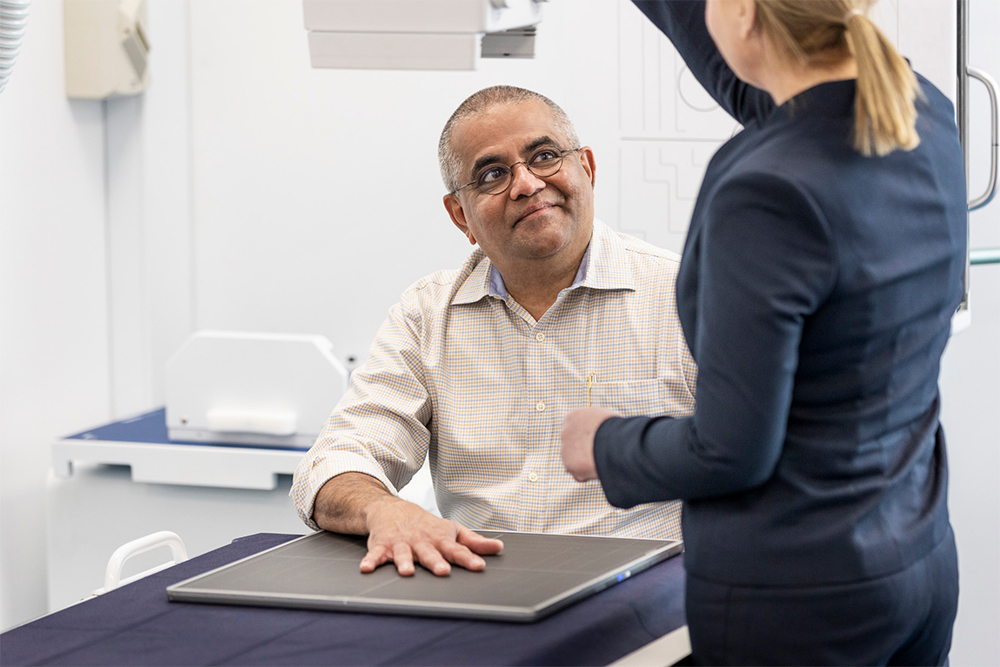
To undergo an X-ray, you are typically positioned on an examination table, and the X-ray machine is adjusted to focus on the specific area of interest. The radiologist, responsible for operating the equipment, may use lead aprons or shields to protect parts of the body not being imaged. Patients may need to hold their breath briefly to minimise motion and ensure clear images.
X-rays offer a powerful and non-invasive means of visualising internal structures for diagnostic purposes. Patients undergoing X-ray procedures can expect a swift examination that provides valuable information for medical professionals to make informed diagnoses and treatment plans. As with any medical procedure, communication with healthcare providers about concerns and considerations is crucial for ensuring a safe and effective experience.
If there is any chance you might be pregnant, please inform your radiographer before your X-ray as we may need to implement special precautions.
How do I prepare for an X-ray?
Generally, there is no special preparation that you need to do prior to your appointment, however our staff will advise you if you do need to prepare in some way. Usually, you will be asked to wear comfortable clothing and change into a gown, as well as remove metal objects such as jewellery, dentures and glasses as they can affect the quality of the scan.
What do you need to bring to your appointment?
- Your referral form – please note we accept referral forms from all providers
- Medicare card
- Any prior imaging
Results
After your X-Ray our highly skilled radiologist will analyse the images and interpret the findings. Once this process is complete, the results will be shared directly with your referring doctor. This streamlined communication ensures that your doctor receives the information as soon as it becomes available.
Your doctor, armed with the insights provided by the radiologist, will then take the time to thoroughly review the results.
Fees and Billing
As a radiology provider deeply committed to serving the community, we strive to facilitate access to essential medical services. In the majority of cases, we bulk bill to Medicare. Before your scheduled appointment, we strongly recommend checking fees with the specific radiology practice you plan to visit.